
2. Adaptation of an animal: much like plants, animals have changed as millenniums pass to better protect themselves. An example of this is the thick wooly coat that animals such as sheep have to keep from freezing in the winter. In the case of the geese shown in the image, they have adapted to have both the ability to fly and the instinct to migrate south when winter approaches.

3. Adaptation of a Plant: as a way of protecting themselves from either poor environment conditions or predators, plants have adapted in many ways. Some of these include physical defenses such as thorns, of functional changes like the ability to hold water for a long period of time. The opuntia shown protects itself from predators with its sharp spikes.

4. Amniotic Egg: if an egg contains an amnion, a lining between the egg shell and the embryo, it is amniotic. An example of this would be a chicken's egg, which has a thin layer (the amnion) between the shell and the yolk.

5. Analogous Structure: an analogous structure is a structure of an organism that relates to an organism from a different species in appearance, function, or structure. Though the llama and the sheep next to it come from a different ancestor, they have legs similar to each other in all three categories mentioned.
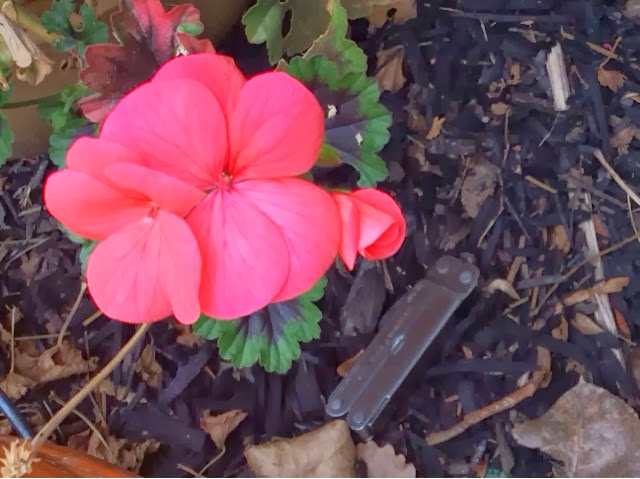
6. Angiosperm: an angiosperm is a vascular seed plant in which the plant reproduces by fertilizing its own eggs, which usually grow in the flower of the plant. The herb-Robert geraniu in the image can be
classified as an angiosperm because of the presence of anthers, the male reproductive parts.

7. Annelid: an annelid is a segmented worm found in marine environments which have bilateral symmetry and are coelomates. The earth worm shown in the image, as well as any other type of worm, is an example of an annelid because of its simple, segmented body.

8. Arachnid: an arachnid is a joint-legged invertebrate animal that has eight legs. The pholcidae, which is often referred to as a "daddy long-leg" has two segmented body parts along eight legs, features that distinguish it as an arachnid.

10. Arthropod: an invertebrate animal fulfilling three requirements; an exoskeleton, a segmented body, and jointed appendages. This makes up insects, many arachnids, and crustaceans. Allegheny Mound Ants, a type of insect, fill all three of these requirements.

11. Artificial Selection: also known as selective breeding, this is the process in which humans plants and animals for a specific trait. The Rag-doll Sepia shown is bred for its blue eyes and passive demeanor.

12. Bilateral Symmetry: if any organism is spit in two, or any of its parts are split in two, and the results are mirror images, it is an example of bilateral symmetry. In the case of the confederate jasmine vine shown, when any of the leaves are split down the middle, the two results are nearly identical.

13. Bryophyte: any land plant that does not have vascular tissue is referred to as a bryophyte. There are three groups of bryophytes; liverworts, hornworts, and mosses. Growing on the tree is a type of moss known as hedwigia ciliata.

20. Fungi: fungus are a large group of eukaryotic organisms that contain chitin in their cell walls that serve to be decomposers. Fungi include microorganisms such as yeast and mold, as well as much larger mushrooms, like the one shown in this image.

21. Gastropod: a gastropod is a mollusk of the large class Gastropoda, which includes different species of snails, slugs, and whelks. Gastropoda have a wide variety of both habitats and eating habits. The image shows a slug, part of one of the larger gastropod species groups.

23. Gnathostome: any vertebrate that has a jaw is termed a gnathostome. This includes around sixty-thousand species, one of which is a human.

24. Gymnosperm Cone: instead of having a flower such as angiosperms, gymnosperms are seed-producing plants which create hard cones as protection that store seeds inside them until they are ready to begin growing. An example of this type of protection is seen in a pinecone, which has a hard and sharp exterior and stores seeds in its folds.

25. Gymnosperm Leaf: the majority of gymnosperm leaves are evergreen, meaning the tree keeps the leaves during the winter. Gymnosperm leaves are simple among the conifers, meaning the blade is a single unit, or compound among cyads. The image shown is of a pine, an example of a gymnosperm, and it's needle-like leaves.

27. Lichens: a lichen is a photosynthetic organism and a fungus growing together, where the fungus benefits from the presence of the photosynthetic organism, and the photosynthetic organism in not affected. The crustose growing on the rock can be seen as a lichen because of the photosynthetic top covering the rock.

28. Modified Leaf of a Plant: a modification of the leaves is a method of adaption caused by environmental stress. Plants may change the structure and color of its leaves, or add spines or thorns. In the image shown, the Aloe Vera leaf has thorns on it to protect itself from predators.

31. Mycorrhizal Fungi: This type of fungi colonizes a plants roots, using them as a source of nutrients. From this, the colonized plant is more resistant to drought and can survive better in barren conditions. The roots seen in the image are most likely mycorrhizal, something that can be observed by the patches of white on the roots.

39. Tetrapods: this animal group contains all animals with four legs, whether they are extinct, alive, mammalian, reptilian, avian, or amphibian. The Beagle shown in this image naturally has four legs, making it a tetrapod.

No comments:
Post a Comment